
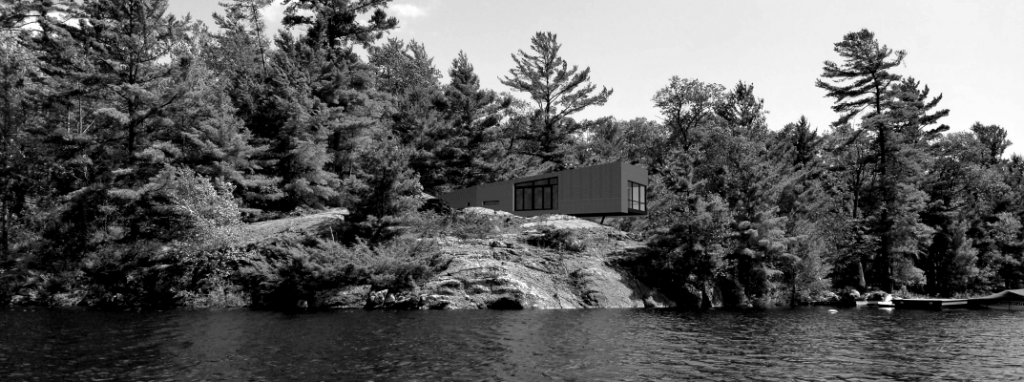
People have been building in Ontario Cottage Country for close to two centuries now, and it is fair to say that empty building lots or islands with gentle, sloping, sandy shoreline are few and far between. The reality is that if one is to build a cottage, now more than ever, it will most likely be built on rock, either flat or elevated. It can look great, and some might think that a rocky site is a good thing: rock is solid, dry, and might even save one the effort of building a full foundation wall or footing.
But is rock really good to build on?
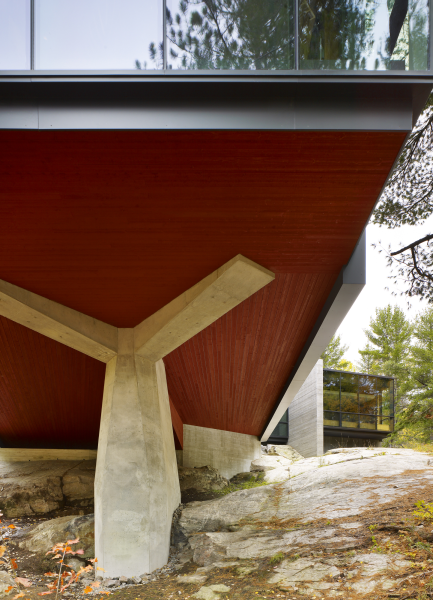
The common rock formation in the Muskoka / Georgian Bay area is Gneiss. This stone has a fascinating history that involves formation at great depth with high pressure & heat, followed by glacial sculpting and millennia of erosion. What we see at your typical cottage lot or island, is Gneiss that has been exposed to weather for a very long time – this is important – it means that what appears solid and unrelenting, may in fact be weak and can possibly move. It is called ‘cap-rock’: a layer of rock that may be as much as 6’ deep but not fully bedded with the rock below it and has been subject to repeated cycles of freeze/thaw. It is common to see cap-rock with veins of earth underneath many feet below, complete with tree roots. It is for this reason that engineering will assume a very low bearing value for exposed rock, similar to soft concrete.
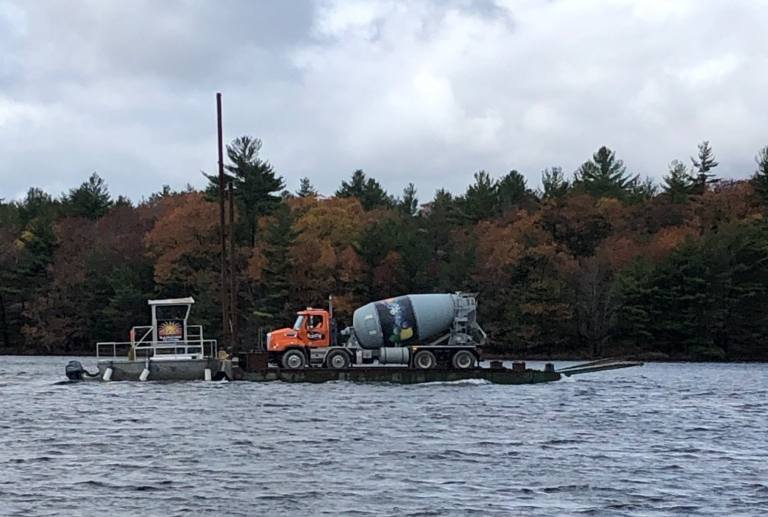
Building on cap-rock has a variety of solutions, depending on the needs of the structure above. Simple concrete block piers may be sufficient (and are very common) while more elaborate structures may require cast in place reinforced concrete walls or even explosive removal with deep pile structures. At remote locations, developing anchored structures with poured concrete can be difficult and expensive.
At least it is dry, right?

One tends to think of the Gneiss as dry (which it is not) and impermeable (which it sort of is). The reality of building on rock in Northern Ontario is that water can be driven horizontally through fissures, pumping up to where you may not want it, such as inside a foundation area. Likewise, while topsoil may be sloped to drain, the rock surface only slightly below may not drain at all. Pooling water during the shoulder seasons can freeze and jack concrete structures off the rock.
These issues, though technical, can be planned for. Thorough site investigation, planning and budgeting will ensure that unexpected, expensive structural solutions are avoided. Ultimately, building on that rocky site can be the advantage that was originally hoped for.
Give us a call, and tell us about your vision; we’ll help you build that rocky retreat.